
Guides
Plug-In Heaters in Ireland: Handy but Hungry

Oct
The Handy Plug-In Heaters Are Back — Here’s What You Need to Know Before You Plug One In
The Supermarket Heater Temptation
Ah, it’s that time of year again — the evenings are darker, your breath’s fogging up the window, and the supermarket aisles are suddenly full of handy plug-in heaters. They promise instant heat, a quick fix for the chill, and for under €30 — sure what could go wrong?
Well… here’s what you should know before you plug in.
Whether you’re watching your bills at home or trying to make your power station last through a cold snap, it’s worth knowing what you’re really plugging in.
Let’s Talk Power Draw (Without the Tech Headache)
Most of these mini heaters use a heating element — the same basic idea as a kettle or electric hob: a wire that gets very hot when electricity flows through it.
Here’s how they stack up against the things you already use:
- Typical plug-in heater: 1,500–2,000 watts (W)
- Small kettle: 1,500–2,200W
- Single electric hob ring: 1,000–2,000W
- Hair dryer: 1,200–1,800W
That means a small heater can use as much power as boiling a kettle, every single minute it’s on.
And that adds up fast, whether you’re plugged into the wall or running off a power station.
If You’re Using a Portable Power Station
Here’s where it gets important. Most mid-range portable power stations (like the EcoFlow Delta 3, Anker SOLIX C1000, or Bluetti AC180P) are built for practical use, charging laptops, phones, tools, modems, lights, or even small appliances — but they have their limits.
For example:
- The EcoFlow Delta 3 can handle 1,800W output, it’ll run a small heater, but it’ll drain its 1kWh battery in 30–40 minutes flat.
- The Bluetti AC180P is much the same, fine for short bursts of heat, but you just won’t get hours of toasty comfort.
In other words: you can do it, but you’ll be out of juice before you’ve warmed your toes.
Your power station is much better used for essentials, lighting, communication, fridges, and routers, because resistive heaters are simply too hungry.
At Home: Small Heater, Big Bill
Even plugged into the wall, those handy heaters aren’t quite the “cheap to run” fix they appear to be.
At Ireland’s current electricity rates (around €0.35 per kWh):
- 1.5kW heater × 1 hour = 1.5 units = about 52 cent per hour.
Run it for 4 hours a day, and you’re looking at over €60 a month, from one small heater.
It’s easy to underestimate, because they feel “handy,” but they’re one of the least efficient ways to heat a room.
Safer, Smarter Ways to Stay Warm
There are better ways to fight the chill without emptying your wallet, or your power station:
- Use lower-draw devices:
Electric blankets, heated throws, or heated seat pads use as little as 50–100W, and work directly where you need warmth. - Keep your power station for essentials:
Prioritise lighting, refrigeration, and communication, and things that keep life ticking when the weather turns foul. - Avoid overloading circuits:
Don’t daisy-chain multiple heaters or run them on extension leads. Keep it safe and simple. - Mind the vulnerable:
For anyone who needs extra heat, make sure heaters are used safely, on a flat surface, clear of bedding, furniture, and curtains, and switched off when not in use.
A Bit of Warmth and Woolly Wisdom
I can see the wisdom in the wool with our ancestors in their Aran jumpers as I write this, holding onto my store-bought electric pillow (practical field testing, of course!). I’m always testing ways to stay warm without draining my power station, currently drawing just 60W, and I’m surprised (and happy) to say it’s keeping me warm!
It does make me think though, maybe knitting classes should make a big comeback.
For so many reasons: practicality, money-saving, community, creativity — a win-win in every way.
And keep the power stations for their real practical uses: lights, fridges, laptops, phones, and staying connected when the weather or ESB acts up.
At Off Your Grid, we believe in honest, practical energy advice.
So yes, you can run a heater on a power station for a while. But just because it fits the plug doesn’t mean it’s the best use of your power.
Think of your portable power like a smart battery reserve, perfect for your lights, fridge, and tech during an outage or trip. Use it wisely, and it’ll serve you for years.
Stay warm, stay safe, and stay powered — and if you’re unsure what your power station can safely handle, drop the team a message.
A Smarter Way to Heat (and Cool)
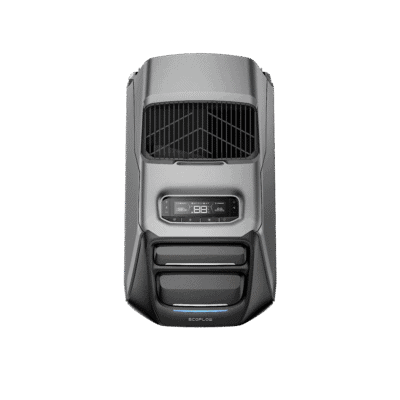
If you really do need portable heat, the new EcoFlow Wave 3 is worth a look.
It’s not your average plug-in heater — it’s a dual heating and cooling system designed to run efficiently from a power station or mains, with smart control to manage draw and temperature.
Ideal for home offices, campers, or sheds, it’s a cleaner, more controlled way to stay warm without burning through your battery (or your budget).
👉 Check out the EcoFlow Wave 3 here

